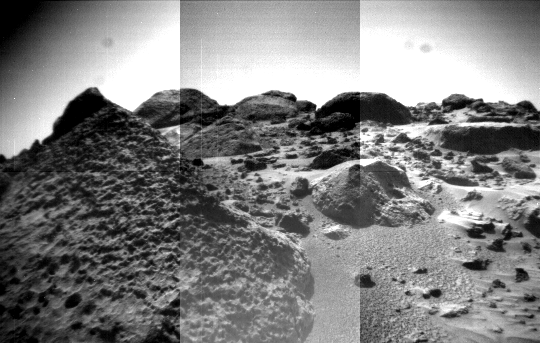
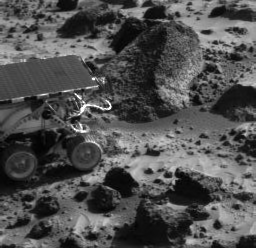
TRAVERSE HAZARDS (DETECTED)
35044 move       (-5907,  -62) F294: DIFF0 ART2
35044 move       (-5932,  -53) F2A6: DIFF0 ART2
35044 move       (-5956,  -44) F2CC: DIFF0 ART1
35044 move       (-5972,  -38) F2C9: DIFF0 ART0
35044 move       (-6012,  -23) F338: AY0 AZ1
35044 move       (-6100,   10) F187: AY0
35044 move       (-6180,   40) F15A: ART0
35053 move       (-6382,  116) F150: AZ1
35053 move       (-6723,  271) EBAE: AZ1
35053 move       (-6745,  283) EA65: AZ1
35053 move       (-6977,  445) E64A: AZ1
35065 move       (-7687,  928) ACB9: AZ1
35065 move       (-7787,  736) AC60: AZ1
35065 move       (-7827,  661) AD0C: AZ1
35065 move       (-7839,  638) AD71: AZ1
35069 move       (-7946,  410) AE5D: AZ1
35069 move       (-8023,  234) AF0A: ART0
35069 move       (-8029,  218) AF50: ART0
35069 move       (-8038,  194) AF28: ART0
35069 move       (-8045,  179) AEE3: ART0
35069 move       (-8056,  156) AE1C: ART0
35069 move       (-8064,  140) ADC8: AZ1
35069 move       (-8127,   12) AF11: AZ1
35073 turn_at    (-8127,   12) C43D: AZ1
35073 turn_at    (-8127,   12) C8EE: AZ1
35073 turn_at    (-8127,   12) CB22: AZ1
35079 goto       (-8103,   -5) E5AD: AZ1
35079 goto       (-8068,  -33) E578: AZ1
35079 goto       (-8060,  -39) E584: AZ1
35079 goto       (-7852, -205) E445: AY0
35079 goto       (-7830, -224) E45E: AY0
35079 goto       (-7808, -241) E435: AY0
35079 goto       (-7622, -393) E3D3: AZ1
35079 goto       (-7458, -530) E2D6: AZ1
35079 goto       (-7303, -666) E26C: AZ1
35079 goto       (-7262, -702) E38A: AZ1
35079 goto       (-7116, -824) E462: AZ1
35079 goto       (-7035, -888) E4C5: AZ1
35079 goto       (-6985, -929) E45E: AY0
35079 goto       (-6977, -935) E4B1: AY0 AZ1
35079 goto       (-6942, -963) E52F: AZ1
35079 goto       (-6825,-1055) E3CB: AY0
35079 goto       (-6745,-1119) E5FC: AZ1
35079 goto       (-6694,-1155) E69E: AZ1
35079 goto       (-6686,-1161) E6AB: AZ1
35079 goto       (-6664,-1177) E694: AX0
35079 goto       (-6628,-1203) E673: AX0 AZ1
35079 goto       (-6600,-1223) E5D1: ART0
35079 goto       (-6579,-1238) E5E8: ART0
35079 goto       (-6570,-1244) E5C4: ART0
35079 goto       (-6570,-1244) E5E0: ART0 AZ1
35079 goto       (-6533,-1271) E6CB: AY0
35089 move       (-6444,-1334) E672: AZ1
35089 move       (-6353,-1399) E65E: AZ1
35089 move       (-6171,-1529) E6CA: AZ1
35093 move       (-6007,-1646) E6E2: AY0
35093 move       (-5916,-1711) E6B5: AZ1
35093 move       (-5902,-1721) E67B: ART0
35093 move       (-5867,-1746) E5C7: AZ1
35093 move       (-5811,-1787) E585: AZ1
35093 move       (-5741,-1839) E4BD: AZ2
35093 move       (-5708,-1865) E4C2: ART0
35093 move       (-5688,-1881) E4D9: RB0 ART0
35093 move       (-5668,-1896) E4CA: RB0 ART0
35093 move       (-5654,-1907) E525: ART0
35099 goto       (-5486,-2030) E564: AZ1
35099 goto       (-5463,-2047) E5D4: AZ1
35099 goto       (-5386,-2100) E67E: AY0
35099 goto       (-5355,-2123) E5D2: AY0
35099 goto       (-5355,-2123) E5CF: AY0
35099 goto       (-5334,-2140) E58B: AY0
35099 goto       (-5296,-2169) E4EE: AY0
35099 goto       (-5296,-2169) E58D: AY0
35099 goto       (-5296,-2169) E9DD: AY0 AZ1
35099 goto       (-5296,-2169) F1CE: AY0
35099 goto       (-5296,-2169) 0512: AZ1
35099 goto       (-5222,-2161) 042E: AZ1
35099 goto       (-5222,-2161) FEBE: AZ1
35099 goto       (-5222,-2161) FC7B: AZ1
35099 goto       (-5222,-2161) F4DB: AY0 AZ1
35099 goto       (-5222,-2161) F29A: AY0
35099 goto       (-5222,-2161) ECB0: ART0 AY0
35099 goto       (-5222,-2161) E8EC: ART0 AY0 AZ1
35099 goto       (-5222,-2161) E58D: AY0 AZ1
35099 goto       (-5222,-2161) E469: AY0
35099 goto       (-5200,-2178) E4EB: AY0
35099 goto       (-5186,-2190) E550: AY0
35099 goto       (-5164,-2207) E4E5: ART0 AY1 AZ1
35099 goto       (-5164,-2207) E4F2: ART0 AZ1
35099 goto       (-5149,-2218) E48A: ART0 AY0 AZ1
35099 goto       (-5128,-2235) E37E: AY0
35099 goto       (-5114,-2247) E2F7: AY1 AZ2
35099 goto       (-5105,-2255) E2CC: AY0
35099 goto       (-5105,-2255) E310: AY0 AZ1
35099 goto       (-5091,-2267) E2C9: AZ1
35099 goto       (-5071,-2285) E280: AY0
35099 goto       (-5050,-2304) E25F: AY0
35099 goto       (-5050,-2304) E294: AY0
35099 goto       (-5015,-2334) E382: AZ1
35099 goto       (-4959,-2379) E3E4: AZ1
35099 goto       (-4940,-2395) E42B: AZ1
35099 goto       (-4904,-2427) E250: AZ1
35099 goto       (-4890,-2439) E11B: AY0
35099 goto       (-4883,-2446) E0F0: AY0
35099 goto       (-4883,-2446) E0E6: AY0
35099 goto       (-4863,-2464) E0CD: AY0
35099 goto       (-4850,-2477) E0CA: AY0
35099 goto       (-4829,-2498) E13C: AY0
35099 goto       (-4829,-2498) E16A: AY0
35099 goto       (-4809,-2517) E1D6: AY0
35099 goto       (-4795,-2529) E2DB: AY0 AZ1
35099 goto       (-4736,-2577) E470: AZ1
35099 goto       (-4715,-2595) E318: AY0
35099 goto       (-4715,-2595) E2D4: AY0
35099 goto       (-4695,-2613) E204: AY1 AZ1
35099 goto       (-4681,-2625) E1AE: AY0 AZ1
35099 goto       (-4667,-2637) E1E3: AY1
35112 turn_to    (-4667,-2637) E19C: ART0 AY1
35112 turn_to    (-4667,-2637) DECB: ART0 AY0
35112 turn_to    (-4667,-2637) DBFE: ART0 AY1 AZ1
35112 turn_to    (-4667,-2637) D937: AY0
35112 turn_to    (-4667,-2637) D5EF: AZ1
35112 turn_to    (-4667,-2637) D343: AZ1
35112 turn_to    (-4667,-2637) CD31: AY0
35112 turn_to    (-4667,-2637) CA9C: AY0 AZ1
35112 turn_to    (-4667,-2637) C754: AY0
35112 turn_to    (-4667,-2637) C48A: AY0
35112 turn_to    (-4667,-2637) C14C: AY0
35112 turn_to    (-4667,-2637) B46F: AY0
35112 turn_to    (-4667,-2637) B229: AY0
35112 turn_to    (-4667,-2637) AF6E: AZ1
35112 turn_to    (-4667,-2637) A9BC: AZ1
35112 turn_to    (-4667,-2637) A63E: AZ1
35112 turn_to    (-4667,-2637) A4C5: AX0 AZ1
35112 turn_to    (-4667,-2637) A48E: AX0 AY0
35112 turn_to    (-4667,-2637) A375: AX0 AZ1
35112 turn_to    (-4667,-2637) 9F2D: AX0
35112 turn_to    (-4667,-2637) 9D33: AX0
35112 turn_to    (-4667,-2637) 9AD3: AX0
35141 turn_by    (-4667,-2637) 9565: AX0
35141 turn_by    (-4667,-2637) 928A: AX0
35141 turn_by    (-4667,-2637) 8FB6: AZ1
35141 turn_by    (-4667,-2637) 8D05: AX0
35141 turn_by    (-4667,-2637) 893E: AZ1
35141 turn_by    (-4667,-2637) 735F: AZ1
35141 turn_by    (-4667,-2637) 6C5D: DIFF0
35141 turn_by    (-4667,-2637) 6921: ART0
35141 turn_by    (-4667,-2637) 5BEE: AZ1
35141 turn_by    (-4667,-2637) 58BF: AY0
35141 turn_by    (-4667,-2637) 5189: ART0
35141 turn_by    (-4667,-2637) 4E6F: RB0 ART0 AZ1
35141 turn_by    (-4667,-2637) 4C05: RB0 ART0
35141 turn_by    (-4667,-2637) 4975: RB0 ART0
35141 turn_by    (-4667,-2637) 461E: RB0 ART0 AY0 AZ1
35141 turn_by    (-4667,-2637) 4338: ART0 AY0 AZ1
35141 turn_by    (-4667,-2637) 3FDE: AY0
35141 turn_by    (-4667,-2637) 3A10: AZ1
35141 turn_by    (-4667,-2637) 3741: AZ1
35141 turn_by    (-4667,-2637) 2BEC: AZ1
TELEMETRY VOLUME
DATA VOLUME SUMMARY (BY APID)*

APID   #PKTS     #BYTES    #Mbits
----------------------------------
  4       41     12048     0.09638
  5       98      4480     0.03584
  6        2       120     0.00096
  7        2        92     0.00074
  8      204    376656     3.01325
  9        0         0     0.00000
 10        0         0     0.00000
 12        0         0     0.00000
 23        0         0     0.00000
 24        0         0     0.00000
 25      122    230966     1.84773
 29       20     25965     0.20772
----------------------------------
         489    650327     5.20262
*All data downlinked on this Sol INCLUDING retransmitted data.
SUBSYSTEM REPORTS
NAVIGATION PERFORMANCE:
ACTIVITIES:
Move the vehicle to a safe position (articulation hazard triggered in sol33),
then continue to drive the vehicle toward rock garden.
-
Vehicle initial position:
- Rover thinks: (-5719, -1232, 313.4)
- Driver thinks: (-5907, -62, 341.0)
-
Cmd #35044: Move -500mm, to get out of the hazard with X,Y and Z accels,
all bogeys and differential disable; completed, no errors.
-
Cmd #35053: Move -1000mm, to back out further from the hazard; completed,
no errors.
-
Cmd #35057: Move -589mm, continue to back out from hazard; completed, no
errors.
-
Cmd #35061: Turn left by 70degs; completed, no errors.
-
Cmd #35065: Move 600mm; completed, no errors.
-
Cmd #35069: Move 600mm; completed, no errors.
-
Cmd #35073: Turn toward target (-6415mm, -1331mm); completed, no errors.
-
Cmd #35079: Go to waypoint (-6415, -1331), heading toward rock garden
entrance; completed, no errors. The rover climbed up a rather
big obstacle such that the right bogey obstructed the laser
beam (right bogey = -15.84degs), which caused the rover saw
the drop-outs at all locations of the right laser beam.
-
Cmd #35085: Turn toward target (-4592, -2666); completed, no errors.
-
Cmd #35089: Move 550mm; completed, no errors.
-
Cmd #35093: Move 550mm; completed, no errors.
-
Cmd #35099: Go to waypoint (-4592, -2666); last traversal toward entrance
of rock garde; completed, no errors. The rover avoided an
obstacle (183mm high) at the far left side, turned to the right
45 degs. It then moved forward for about 70mm, saw an obstacle
at center (~85mm high), and turned back to the left 45degs.
This time, it no longer saw the far left side obstacle,
therefore it proceeded to its destination, and ended at
(-4667, -2637).
-
Cmd #35112: Turn to heading 218degs, toward rock garden; completed, no errors.
-
Cmd #35141: Turn by 180degs, toward lander; completed, no errors.
-
Cmd #35142: Move 0mm; completed, no errors.
The rover completed its today traversal toward rock garden without any errors.
The rover successfully avoided obstacles twice during the second goto waypoint
command. The Z accel continuously showed anomalous readings, however the Y
accel showed its readings were well within operating ranges.
-
The rover current position:
- Rover thinks: (-4667, -2637, 37.2)
- Driver thinks: (???)
CONSTRAINTS:
- Plan the Move command with distance 0.500m or less to avoid
gyro drift.
- Do health check level 2 after every vehicle movement.
- Set Z accel to FORCED_BAD for all vehicle movements.
- Set Y accel to FORCED_BAD for RISK LEVEL = 1 vehicle movements.
- Set Y accel to OK for RISK LEVEL = 2 vehicle movements.
- IF navigation sensor outside limit bit is set to ENABLE in
HAZ_AVOIDANCE parameter (to avoid navigation command errored out because
of Y accel exceeds navigation limit), the following considerations
should be taken in to account:
- * set command TIME OUT longer to allow the vehicle finishes up
the command.
- * check for clearance behind the vehicle at starting position,
the vehicle might back up half of the vehicle length (300mm)
if hazard avoidance somehow triggers just right after the
navigation command starts.
THERMAL PERFORMANCE:
TELECOM PERFORMANCE
MOBILITY PERFORMANCE:
POWER PERFORMANCE:
SEE SOL 37 DOWNLINK REPORT
TELEMETRY PROCESSING ANOMALIES
- LabView (VERSION 8) commands page does not appear to be indicating "gaps" in the command sequence numbers.
PRESS RELEASE
TBD
Web Page Authors: Henry W. Stone and
Allen.R.Sirota
All information on this site, including text and images describing the
Rover is copyright © 1997, Jet Propulsion Laboratory, California Institute of Technology and the National Aeronautics and Space Administration.